A building made for horses
The Royal Stables of Córdoba
How Philip II's royal stables beside the Alcázar were built, what the great stable hall looks like and how a cavalry barracks became a show venue.
Reserve your seat at the stables ↗A decree and a stable
Wikipedia records a royal decree of Philip II, dated 28 November 1567, that created the Spanish Horse breed with formal standards and a royal stable in Córdoba. The king commissioned Diego López de Haro y Sotomayor to build the stables on part of the site of the Alcázar. Córdoba's tourism board says the king founded them in order to breed good horses for the service of the Royal House, and that Diego López de Haro, the Chief Equerry, was put in charge of the building work. The stables went up beside the Alcázar de los Reyes Cristianos, where they still stand.
Which year
Sources disagree on the year. The operator's site says 1568, Spain's tourism board says 1570, Córdoba's tourism board says 1572 and Wikipedia records the 1567 decree. All of them place the stables in Philip II's reign, and all agree on the purpose. If you need one number, say the late 1560s or early 1570s, and name your source. The year matters less than the shared story: a royal stable for the Andalusian, beside the Alcázar.
A military building beside a fortress
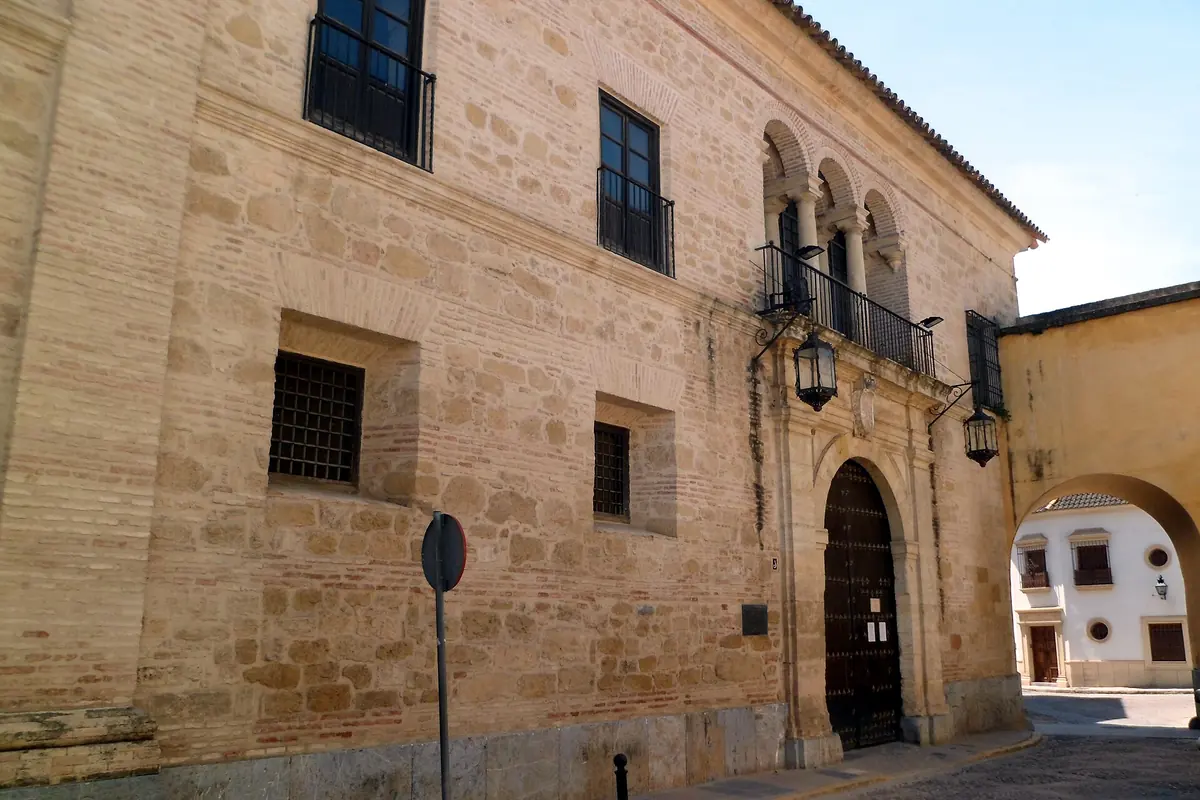
Spain's tourism board says the building shares the military character of the Alcázar next door. Its main space has a groin-vaulted roof supported by sandstone columns and is divided into small stalls. The stables sit in the historic centre and border the Guadalquivir. The Alcázar's gardens lie right beside the Royal Stables.
A cathedral for horses
Córdoba's tourism board describes the great stable as three naves with a cobbled floor and groin vaults, held up by brick arches and heavy stone columns, with stalls on both sides. It adds that the poet Federico García Lorca compared it to a cathedral for horses. The image works because the arches rise over the stalls as they do over the aisles of a church.
Cavalry and stallions
According to Córdoba's tourism board, the building was used without interruption to breed the Córdoba horse. From 1842 to 1995 it became a cavalry barracks, home to the 7th Army stallion depot. More than a hundred Andalusian and Arabian horses were cared for there, used for carriage driving, dressage and breeding mares owned by the army and by civilians. Cavalry use ended in 1995.
A monument in a World Heritage city
The operator describes the stables as a National Historic Monument and part of Córdoba's World Heritage. Wikipedia says the historic centre of Córdoba has been a UNESCO World Heritage Site since 1994, an extension of the Mosque-Cathedral's 1984 listing. Today the stables host a permanent equestrian show, and the operator also offers audio-guided visits and events through the year. Check its visits page for current days, because opening hours change.
Visiting by day
The operator offers audio-guided visits for individuals, with reduced rates for children from 3 to 12 and free entry under 3, and free entry for people born in Córdoba province who show ID. Groups of at least 25 can book guided mornings, and school groups have a programme that covers the anatomy of the horse. It says riders' training times vary, so a visit can be quiet or busy.
Events through the year
Besides the show, the operator stages events in the stables, among them Cabalcor, the Marcha Hípica and the Christmas cup, and runs courses for riders. Its home page describes more than 20 years of history and shows abroad in cities from Paris to Moscow. Those facts come from the operator itself, so check its site for current dates, because the programme changes every year.
Sources